Asia/Karachi
BlogJune 20, 2026

MCP Servers: The USB-C Port for AI Tools

Why Model Context Protocol is changing how agents connect to the real world
Abdul Qudoos
MCP Servers: The USB-C Port for AI Tools — Abdul Qudoos blog cover
Before MCP, every AI product reinvented the same glue code: custom connectors for GitHub, Postgres, Slack, Supabase, and dozens of other services. Each new model or client meant another round of bespoke integration work — the classic N×M problem where N clients must each talk to M tools. The Model Context Protocol (MCP), open-sourced by Anthropic in late 2024, solves this with a host → client → server architecture built on JSON-RPC. One MCP server exposes capabilities once; any compliant host (Claude, Cursor, ChatGPT, VS Code Copilot) can use them without custom adapters. MCP servers offer three core primitives:
  • Tools — functions the model can call (create issue, run query, send email)
  • Resources — read-only context (files, schema docs, config)
  • Prompts — reusable templates for common workflows
This is deliberately similar to how the Language Server Protocol standardized IDE language support — but for AI context and actions. In client work I use MCP daily inside Cursor: Supabase schema inspection, deployment checks, browser testing, and email APIs all arrive as plug-in servers instead of hard-coded routes in the app. For SaaS products, MCP means:
  1. Faster shipping — connect a Postgres or Stripe server instead of writing a new API layer per feature
  2. Model-agnostic design — swap Claude, GPT, or open models without rewriting tool wiring
  3. Clear security boundaries — hosts negotiate capabilities; sensitive actions can require human approval
Governance has matured quickly: MCP moved under the Linux Foundation's Agentic AI Foundation (with OpenAI, Google, Microsoft, and others), signaling it is becoming shared infrastructure rather than a single-vendor feature. On portfolio and automation projects I combine:
  • n8n / Make.com for scheduled workflows
  • LangChain / LangGraph for multi-step reasoning
  • MCP servers for live tool access during development and agent runs
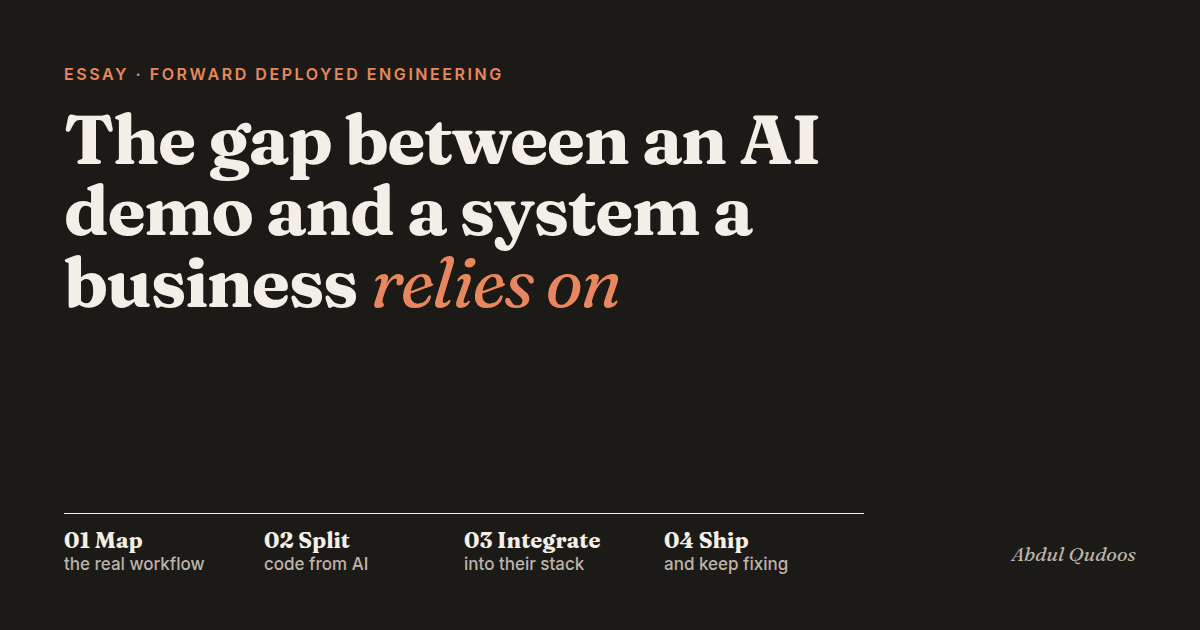
The pattern is simple: keep business logic in your app, expose operational tools through MCP, and let the agent orchestrate — don't embed every API call inside a monolithic prompt. The 2026 spec push toward stateless HTTP transport makes MCP servers easier to scale behind ordinary load balancers — a big step for enterprise deployments. Extensions like MCP Apps even let tools return interactive UI inside the chat surface. If you are building AI features in 2026, learning to write or configure MCP servers is as practical as learning REST was a decade ago.
Share this post: